Weedkiller and Our Councils: Why Aberdeen — and Britain — Need to Stop Spraying
Councils across the UK spend millions spraying glyphosate around trees, pavements, and playgrounds. Meanwhile, cities across Europe have banned it entirely — and their streets look better for it.

Walk through any park in Aberdeen in spring and you'll see it: a ring of yellowed, dead vegetation around the base of every street tree. Not disease. Not drought. Glyphosate. The world's most widely used herbicide, sprayed by council workers to keep things tidy.
This is what passes for land management in twenty-first century Scotland. A chemical classified as "probably carcinogenic to humans" by the World Health Organisation's cancer research agency [1], applied around the roots of trees it is supposed to be protecting, in parks where children play and dogs roll. Aberdeen City Council, like most UK local authorities, treats this as routine. It shouldn't be.
The evidence they're ignoring
The International Agency for Research on Cancer made its assessment in 2015, based on evidence linking glyphosate to non-Hodgkin lymphoma in agricultural workers. Bayer, which now owns Monsanto, has since paid over $10 billion to settle more than 100,000 lawsuits from people claiming Roundup caused their cancer. The company disputes the findings. The money tells a different story.
But the cancer question, grave as it is, obscures a more immediate problem. Glyphosate is devastating to the soil biology that keeps urban trees alive. Research published in Scientific Reports in 2021 found that glyphosate significantly reduces earthworm activity and disrupts mycorrhizal fungi — the underground networks through which trees exchange nutrients and water [2]. A separate study in Chemosphere confirmed that even low concentrations alter soil microbial communities in ways that persist for months.
Spraying glyphosate around the base of a tree is, to put it plainly, poisoning the organisms keeping that tree alive. The dead ring you see above ground is a visible symptom of damage that extends much further below.
What the rest of Europe worked out years ago
While UK councils continue to spray, much of Europe has simply stopped.
France banned all non-agricultural use of glyphosate in 2019. Paris now uses a combination of mechanical weeding, hot foam, and — radically — allowing plants to grow in pavement cracks. The city's urban greening programme has turned what councils here call "weeds" into a feature. The streets are cleaner, greener, and infinitely more pleasant than anything Aberdeen manages [3].
The Netherlands banned glyphosate on all paved surfaces in 2016. Dutch councils use hot water, brushing machines, and targeted flame weeding. Amsterdam's pavements are immaculate. Germany committed to a complete phase-out, with municipal use banned ahead of schedule. Many German cities now use integrated vegetation management — combining manual removal, mulching, and planting ground cover that outcompetes weeds naturally.
Barcelona brought in goats. Herds of them, grazing in public parks to manage undergrowth. The programme has been wildly popular with residents. It sounds eccentric until you compare it with the alternative: a man in a hazmat suit spraying carcinogens near a playground.
The cost excuse doesn't hold up
The argument you'll hear from UK councils is always the same: there's no cost-effective alternative. This is untrue. It's a convenient line repeated by people who haven't looked at the data.
Companies like Weedingtech produce hot foam systems that kill weeds using boiling water with a biodegradable foam insulator. Several UK councils, including Hammersmith & Fulham, have already adopted this. The initial outlay is higher. The long-term cost, once you factor in environmental damage, health liability, and public trust, is lower.
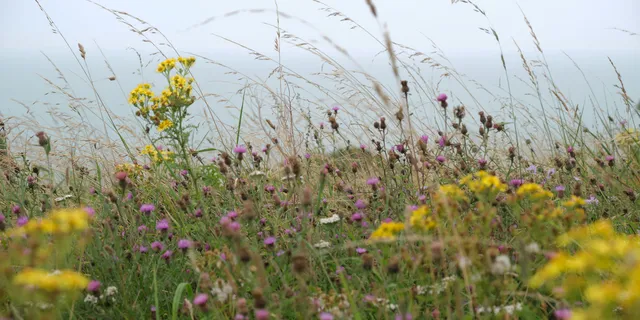
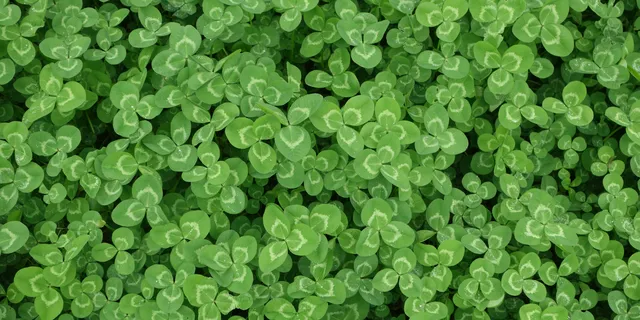
Mulching around trees — laying wood chip instead of spraying a kill-ring — suppresses weeds, retains moisture, feeds the soil, and looks far better. This is standard practice in modern arboriculture. Planting low-growing ground cover like clover, creeping thyme, or native wildflowers eliminates the "weed" problem entirely by replacing bare soil with living plants that support pollinators.
Or there's the most radical option of all: accepting that a dandelion growing through a pavement crack is not, in fact, a crisis.
What you can do
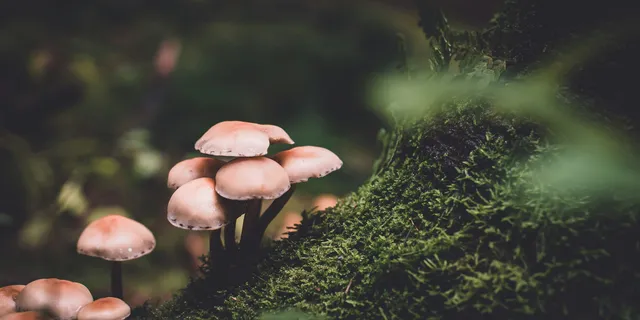
You don't need to wait for the council to catch up. In your own garden, ditch the Roundup. Pour boiling water on path weeds if you must. Mulch your borders with bark — three inches deep suppresses almost everything. Plant ground cover in bare patches. Leave mushrooms alone — they're a sign of healthy soil.
If you use a garden maintenance service, ask whether they use chemicals. We don't. At Albyn Fieldworks, we cut grass and manage gardens without herbicides, because there's simply no need. If you'd like to book a visit, everything is done mechanically. No sprays, no residue, no dead rings.
Aberdeen deserves better than brown circles around its trees. Scotland deserves better than the chemical default. And the soil beneath your feet — the living, fungal, microbial community that holds everything together — certainly does.
Notes
[1] The IARC classification of glyphosate as "probably carcinogenic to humans" (Group 2A) was published in The Lancet Oncology, March 2015. The assessment was based on limited evidence in humans for non-Hodgkin lymphoma and sufficient evidence in experimental animals. Bayer contests the classification; virtually every independent scientific body that has reviewed the same evidence has reached the same conclusion as the IARC.
[2] Zaller, J.G. et al., "Glyphosate-based herbicides reduce the activity and reproduction of earthworms and lead to increased soil nutrient concentrations," Scientific Reports, 2021. The study found significant reductions in earthworm surface activity and reproduction in glyphosate-treated plots versus controls.
[3] The contrast between French and British municipal weed management is stark. A useful overview of the European shift away from glyphosate can be found in PAN Europe's Pesticide-Free Towns campaign. For the UK picture, Pesticide Action Network UK maintains a database of council pesticide use.
Albyn Fieldworks
Local gardener in Aberdeen & Aberdeenshire